From Zero to a Scalable Food Brand: Building Choppin' From Scratch
How we built the foundations of a Filipino-Canadian food brand through business strategy, pricing, costing, marketing, partnerships, community and preparation for growth.
August 2026 · By IC Strategies
TL;DR
The Challenge
Build a food brand from zero: no distribution network, limited resources, limited production capacity, and a need to prove demand before making significant investments.
What We Worked On
Business Model
Unit economics, pricing, margin structure and channel economics.
Brand
Positioning Choppin’ as Filipino food built for Canada.
Marketing
Demand creation, community, storytelling and content.
CSR
Community participation built into the brand, not added on top.
Partnerships
Resellers, community organizations, food contacts and collaborators.
Scaling Preparation
Production, distribution and operational infrastructure.
The Core Idea
Building a food brand is not simply about selling more of a product. It requires a business model that makes economic sense, a brand that earns trust, and operations that can support the next level of demand.
Featured Strategic Idea
“The objective wasn't simply to sell more. It was to build a business capable of selling more.”
The Full Story
Introduction
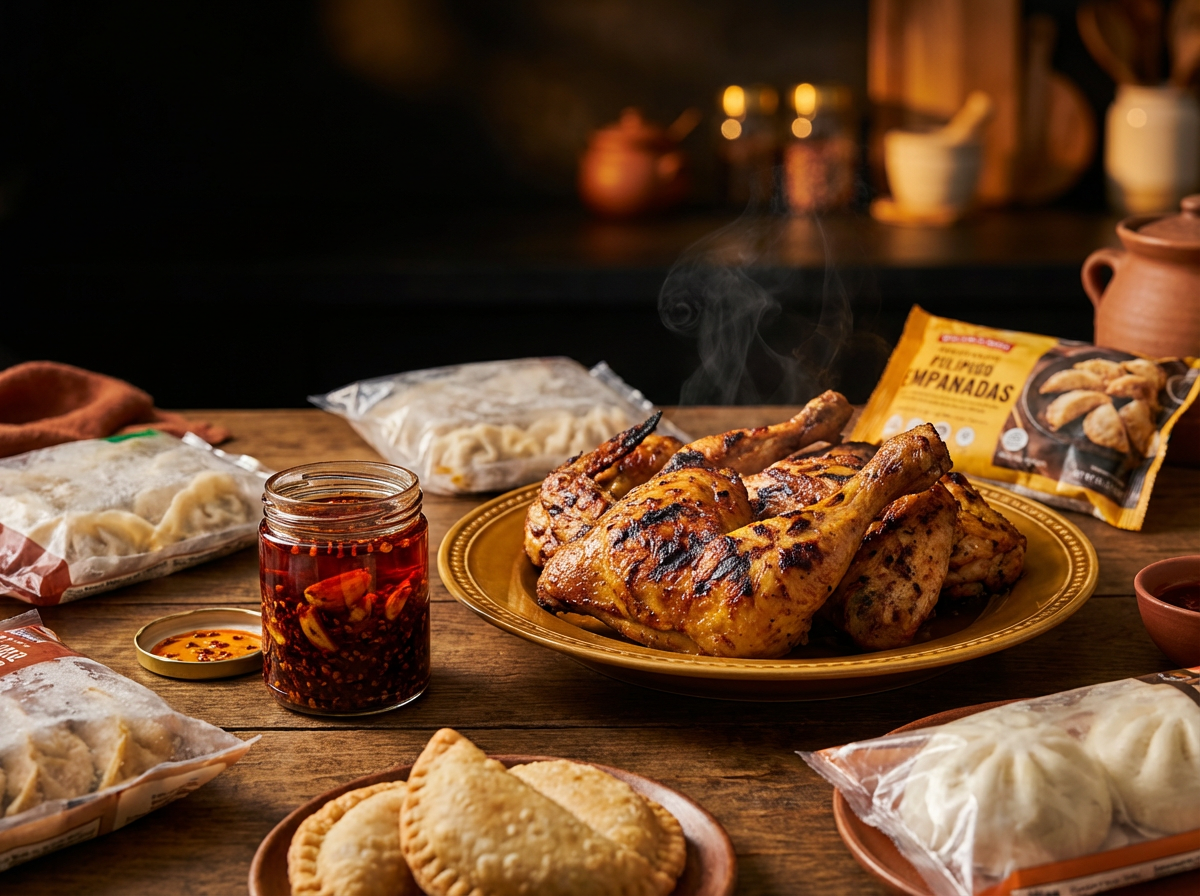
Choppin' started with a simple product: frozen chicken inasal.
But building a food brand is not simply about creating a product people like.
We had to answer harder questions.
Can it make money?
What should it cost?
What should we charge?
How do we create demand?
Which partnerships matter?
What could prevent the business from scaling?
That became the real work.
The Challenge
Choppin' was built from scratch.
A new brand. Limited resources. No established distribution network. A product category with real potential, but a need to build demand before making significant investments in production or infrastructure.
The product also needed to work beyond its initial Filipino audience to reach the broader Canadian market.
Production capacity was limited by the realities of operating out of a commercial kitchen.
These were not problems that could be solved simply by selling harder.
The business needed a foundation that made commercial sense before it could grow.
“The objective wasn't simply to sell more. It was to build a business capable of selling more.”
Building the Business Model
Before Choppin' could grow, we needed to understand what a viable Choppin' looked like economically.
That meant working through the full cost structure:
Ingredients and production costs
Packaging
Labour
Overhead
Unit economics at different volumes
Target margins
Wholesale economics
Retail economics
Distribution considerations
Distribution, in particular, changed the economics significantly.
Self-delivery preserved margin. Third-party distribution reduced it considerably. That trade-off had to be understood before the business could make informed decisions about which channels to pursue and in what order.
Price for the business you are building, not just the product you are selling today.
Pricing was considered in relation to future channels. Retailers, distributors and the brand itself all need viable margins for the model to work at scale.
Building the Brand
A product does not automatically become a brand.
Choppin' was positioned as Filipino food, built for Canada.
That framing mattered. It acknowledged the cultural roots of the product while making clear that the brand had a place in the broader Canadian market, not just within Filipino communities.
The brand was built around more than the product itself:
Filipino food and culinary heritage
Immigrant entrepreneurship
Canadian opportunity
Community connection
The business-building story behind it
This gave Choppin' something to say beyond the product. That matters for a brand trying to earn trust and build loyalty.
Marketing and Demand Generation
Creating demand for a new food brand in a limited market requires more than posting product photos.
We approached marketing as a layered effort, where each activity contributed to something useful:
Product storytelling
What the product is, where it comes from, how to use it.
Founder and business storytelling
The context behind the brand that builds credibility and connection.
Educational content
Helping potential buyers understand the product category.
Short-form video
Accessible content that could reach new audiences.
Community-based marketing
Showing up where the target audience already was.
Events
Face-to-face opportunities to introduce the product and gather direct market intelligence.
Cross-promotion
Extending reach through aligned businesses and creators.
Collaboration
Building relationships that created mutual value beyond a single post.
Marketing was not treated as content for content's sake. Each activity needed to contribute to awareness, trust, demand, relationships or market intelligence.
CSR and Community
Community participation was not treated as an add-on.
It was incorporated into the brand from the beginning, because a brand that exists within a community needs to be genuinely part of it.
For Choppin', that connection was natural. The brand grew out of Filipino-Canadian entrepreneurship. The community it serves is also the community it came from.
Community participation served several purposes:
It built trust in a way that advertising cannot replicate.
It created genuine relationships with the people most likely to support and share the product.
It gave the brand a presence that felt earned rather than imposed.
And it reinforced the brand story of immigrant entrepreneurship and cultural pride in a way that was authentic.
CSR was used to build meaningful community relevance and trust, not simply as a promotional tactic.
Partnerships
For a small food brand, partnerships create leverage that is difficult to build any other way.
We identified and pursued relationships across several categories:
Food businesses and resellers
Community organizations
Entrepreneurs and founders
Event organizers
Culinary contacts and food professionals
Potential production partners
Potential distribution partners
Media and content partners
What partnerships provided was access.
Audiences
Reach that would have taken years to build independently.
Credibility
Association with trusted organizations and people.
Resources
Shared capacity, venues, tools and expertise.
Market Intelligence
Real-world feedback about what the market would actually support.
Collaboration as a Growth Channel
Collaboration was treated as more than cross-promotion.
A strong collaboration creates something more useful than a single post:
Audience access
Credibility by association
Content that neither party could have created alone
New relationships and potential future partners
Market intelligence from a different vantage point
Choppin' used collaboration to reach new audiences, create content, build relationships, test market interest in different channels, and strengthen its position within the Filipino-Canadian business ecosystem.
The value of a collaboration was assessed not just by the immediate result, but by what it opened up beyond the collaboration itself.
Looking Beyond Sales
At some point in building Choppin', the most important question shifted.
The question was no longer just: how do we sell more?
It became: what could stop Choppin' from scaling?
Production capacity had a ceiling.
Commercial kitchen access was a dependency.
Recipe development had to keep pace with product expansion plans.
Distribution required either time or capital.
Working capital constrained how fast inventory could grow.
Operational systems were still owner-dependent.
Channel economics needed to work at the volumes required for viability.
Partnership capacity was a constraint on how quickly relationships could be built and managed.
Instead of aggressively pursuing every possible customer, we started preparing the infrastructure behind the growth.
The Next Stage: Scaling Opportunity
Choppin' is preparing to explore strategic partnerships that address the infrastructure gaps identified through the build process.
The shift is from selling a product to building the ecosystem required to scale it.
Key Insight
What We Learned
Revenue is not the same as business health.
A business can have a good product, steady sales and real customer demand while still having weak margins, poor cash visibility, owner dependency, limited production capacity and no scalable distribution strategy.
Choppin' forced a confrontation with exactly these questions.
Selling more without fixing the underlying economics just creates a bigger version of the same constraints.
The IC Business Health Check Framework
Profitability
Does each sale make economic sense? Does the business produce enough margin at each channel to fund its growth?
Financial Visibility
Can the business understand and anticipate its cash position? Can it fund the next level of demand without being caught off guard?
Operational Independence
Can the business operate without everything depending on the owner? Is production, fulfilment and customer service dependent on one person?
Growth Capacity
Can the business handle the next level of demand? Is the infrastructure in place, or will growth expose the gaps?
The Growth Model
The Choppin' Growth Model
Why This Matters
This is not a theoretical case study.
Choppin' is a real business that required real decisions around pricing, costing, marketing, partnerships, operations, growth and scaling.
Every question a consulting client asks, we have asked ourselves:
What should we charge?
Where should we invest?
How do we create demand without burning cash?
Which partnerships are worth pursuing?
What should we fix before we scale?
How do we grow without creating a bigger operational problem?
That is the kind of thinking IC Strategies brings to business owners.
We don't just talk about growth. We build businesses through it.
Profitability. Financial visibility. Operational independence. Growth capacity.
These are not just categories in the IC Business Health Check. They are the realities we manage in real businesses.
Want to understand what your business needs before making your next big move?
Take the Free Business Health Check →No obligation.